A moisturizer jar on a white sweep tells a shopper what the container looks like. It says nothing about whether the cream is whipped or dense, whether the serum is runny, or how the skin looks once it's absorbed. That's the gap skincare photography has to close. You can't touch a product through a screen, so the pictures have to do the touching for you.
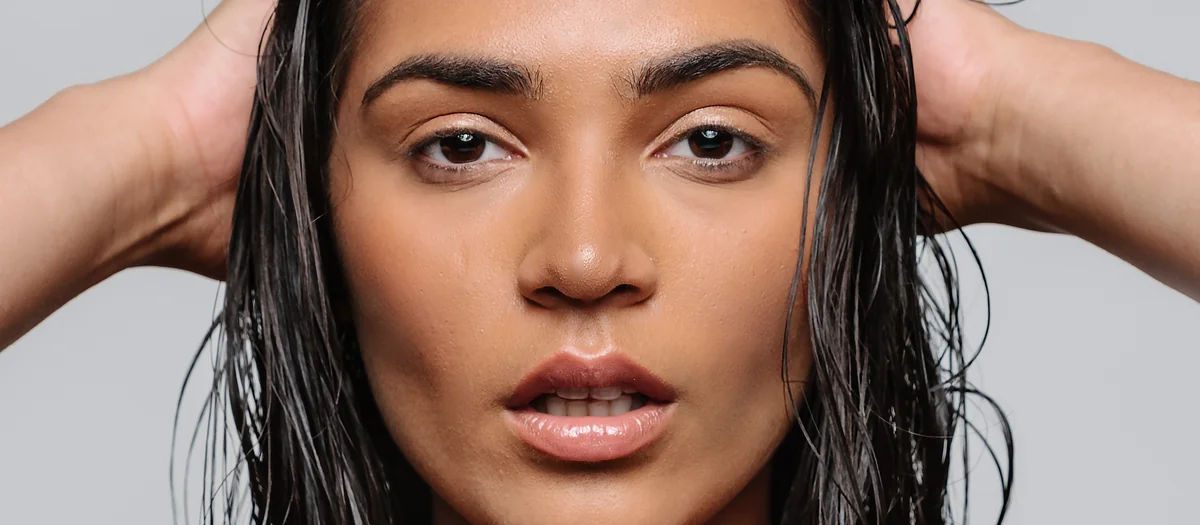
This guide collects the ideas we lean on when planning a skincare set at Vidd Studios, grouped by what each one tells the customer. The portrait at the top of the page, from our beauty work, shows the mood a lot of skincare brands are after: wet hair, bare skin, soft light, nothing hidden. For color accuracy and handling glossy packaging, our cosmetics photography guide goes deeper, so this post stays on creative direction.
Start with what the formula should feel like
Before picking props, write down three words a customer should think when they see the product. "Light, cooling, clean" leads to a very different set than "rich, nourishing, calm." Those words decide the backdrop, the light and which of the ideas below make the cut. A brand with a clinical tone will want restraint. A brand built on botanicals can afford more texture and color.
It also helps to sort the line by type, because each one photographs differently:
- Clear gels and serums need light passing through them to read at all.
- Creams and balms show their character in peaks, swirls and the edge of a scoop.
- Oils look best when they catch a highlight or pool slightly.
- Masks and scrubs benefit from close crops where grain or particles are visible.
- Mists and toners are mostly about the bottle and a sense of freshness.
Planning a shoot in Los Angeles?
Tell us about your products and preferred date and we'll send a full quote.
NOW
Idea 1: Swatches that show texture
A swatch is the most honest skincare image there is. A single smear across a clean surface, a dollop with a soft peak, or a drop sitting on glass tells a shopper more about consistency than any caption.
A few things make swatches work:
- Pick a surface that contrasts with the formula. A white cream disappears on white acrylic, so try light gray, stone or a soft color from the packaging.
- Shoot fresh. Creams skin over and serums spread within minutes, so set lights and framing first and apply the product last.
- Do several takes. The first swirl is rarely the best one. Small spatulas and a steady hand beat fingers for clean shapes.
- Keep one swatch per product consistent across the line, so the product pages line up.
Idea 2: Water and droplets for hydration
Water is shorthand for moisture, which is why it shows up in so much skincare advertising. It can be subtle or the whole concept:
- Droplets on the bottle suggest something cool and fresh. A light glycerin and water mix holds its shape longer under lights than plain water.
- A shallow pool or ripple under the product works as a backdrop for hydrating lines.
- Splashes are dramatic but need fast flash, many attempts and a set that can get wet. They suit a campaign hero more than a catalog.
- Wet skin on a model, like the portrait on this page, connects the product to the result without showing the product at all.
Keep labels readable. A droplet sitting right on the product name is a retouching job waiting to happen.
Idea 3: Light and shadow
Light is where a skincare set gets its personality.
- Backlight makes amber bottles, tinted serums and clear gels glow, and shows how transparent a formula is.
- Hard sunlight-style shadows, from leaves, blinds or a patterned cutout, give a warm, outdoorsy feel without leaving the studio.
- Soft, even light keeps things calm and clinical, which suits ingredient-led and dermatologist-style brands.
Pick one lighting mood per campaign and stick with it. Mixing all three in one product line looks unplanned.
Idea 4: Ingredients and props
If a product is built around an ingredient, a real version of it in the frame makes the claim tangible: a cut citrus slice, a sprig of a herb, a scattering of oats, a piece of aloe leaf. Use what's actually in the formula. A prop that isn't an ingredient can confuse shoppers.
Keep props in a supporting role. One or two elements, slightly out of focus or off to the side, usually do more than a crowded table. Natural textures like stone, linen, wood and ceramic sit well with most skincare, and a single color from the label can tie the scene together.
Idea 5: In-use and routine shots
People buy skincare to use it, so show it being used:
- Hands pumping a serum, scooping a balm or holding a dropper over the palm.
- Application on skin, such as a dot of cream on a cheekbone or a mask being smoothed on.
- Routine sets that show cleanser, serum and moisturizer in the order they're used.
- Before and after, only when the result is real, consistent with the product's claims and retouched with a light hand.
These frames need skin that looks like skin. Retouching should clean up distractions without erasing texture. Our post on how much retouching product photos need covers where to draw that line.
Don't skip the catalog shots
Creative images grab attention, but product pages still need plain ones: the container front-on, the back label if shoppers check ingredients, the cap or pump detail and the size in context. Plan both in the same shoot. Catalog frames first, while products are clean and labels are spotless, then the swatches, water and props. If a marketplace has strict main-image rules, check that platform's own help pages before the shoot.
Planning a skincare shoot with Vidd Studios
When you fill in the Request a Shoot form, include:
- Your product list, including sizes and which items are clear, creamy or oil-based.
- The three words for how the line should feel, plus a few reference images.
- Which ideas above you want (swatches, water, props, in-use, routine) and whether you need a model or hand model.
- Spare units for swatches and messy shots, and a clean set for catalog frames.
- Where the images will run and roughly how many need retouching.
Models, styling, props and on-location work are quoted per project. Retouching is $40-$60 per image, with Standard (8 business days) or Rush (4 business days, rush fee applies) turnaround. For a bigger campaign day, see Half-Day vs Full-Day. Vidd Studios is based in Covina and works with beauty and skincare brands across LA County. See our beauty and cosmetics photography page for more of our work.
Frequently asked questions
What makes skincare photography different from other product photography?
The main thing customers want to know, such as texture, absorption or how skin looks after, isn't visible on the packaging. Skincare photos rely on swatches, water, light and in-use shots to show it.
How do you photograph a clear serum or gel?
Light it from behind or the side so light passes through it, and shoot it against a background that contrasts with its color. A drop on glass or a dropper mid-pour makes the texture readable.
Should skincare product photos include a model?
Not always. Swatches and still life can carry a line on their own, but hands or a face add context for in-use and routine shots. Mention it in your request so we can plan casting and pricing.
How many units of each product should I bring?
Bring at least one clean unit for catalog shots and spares for swatches, water and anything messy, since those products usually can't be reused.
Can you keep skin looking natural in retouching?
Yes. Tell us in the request how natural you want skin and product texture to stay, and we'll retouch to that level.